
Market Mapping
By measuring the importance of consumer needs, you can strategically define your brand proposition and understand your main competitors – those targeting the same needs and customer segments as you.
Here's what different Market Mapping views look like in the platform and what they mean:
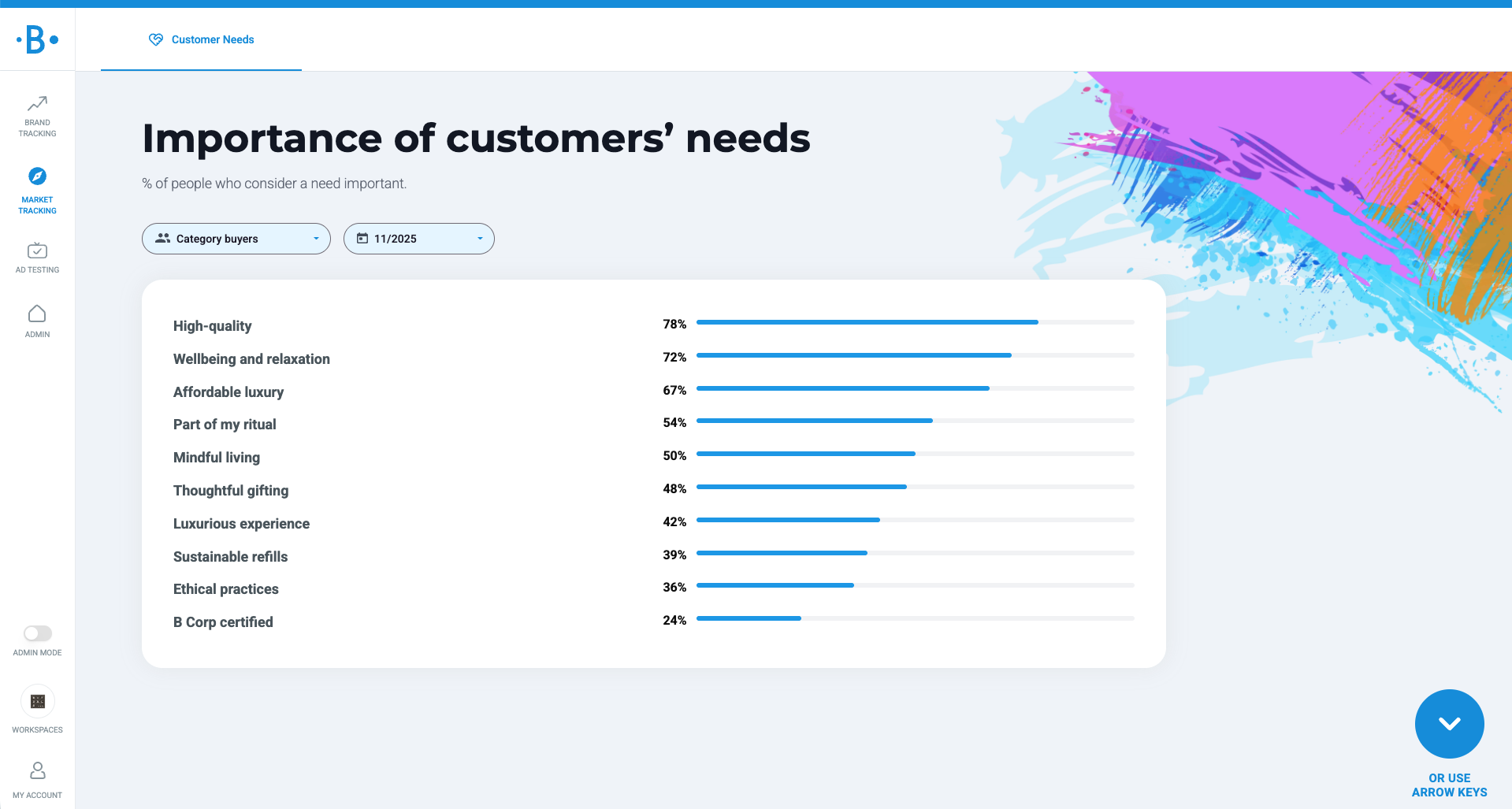
1. Importance of customers' needs
We measure the importance of specific needs within the market. This allows you to see the percentage of people who consider a specific need important, helping you prioritize which consumer demands to address.
You can see how important this needs are for your category buyers, the entire population or other defined segment (e. g. women, young people etc.)
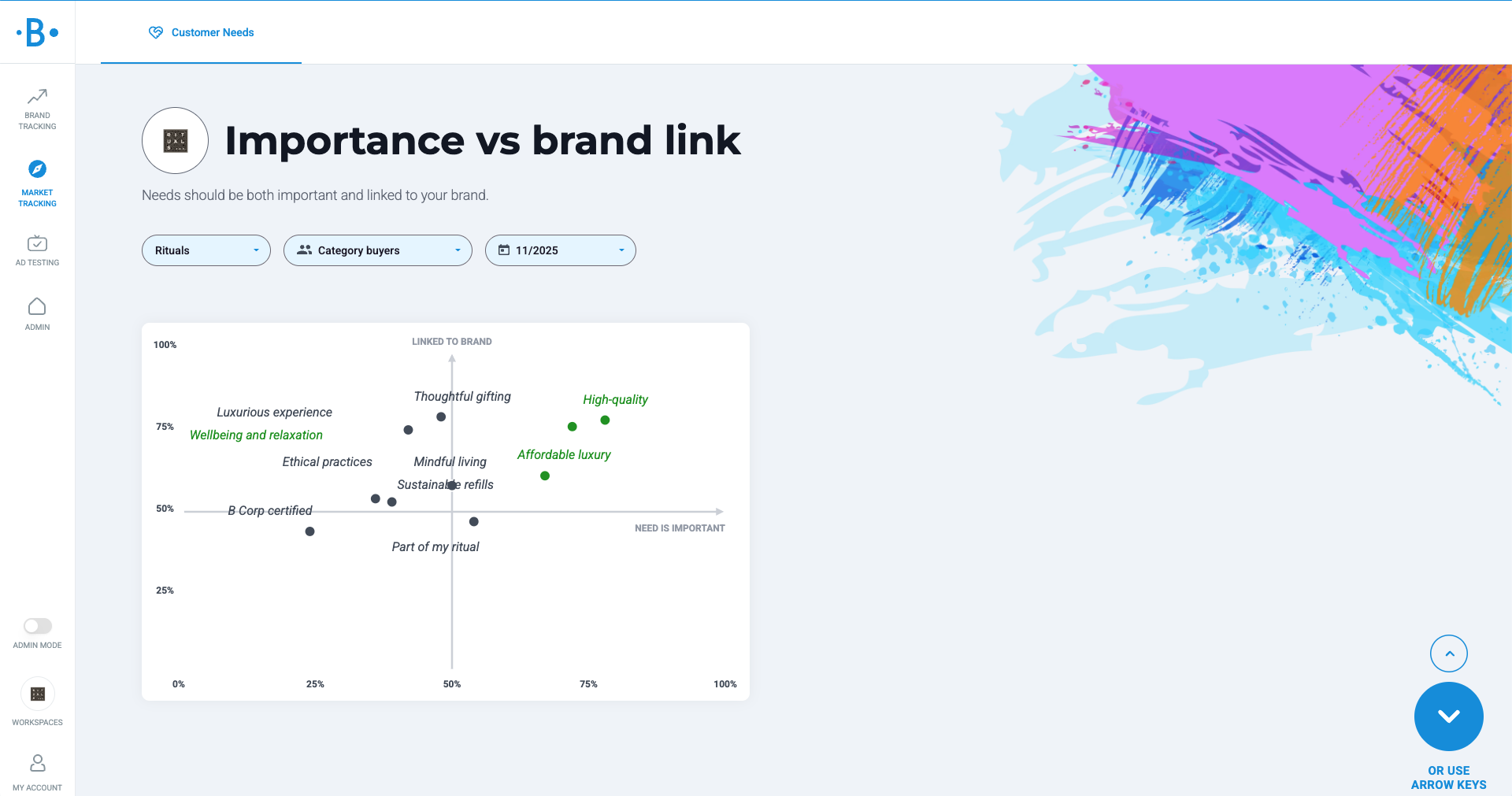
2. Importance vs. brand link
This view connects specific needs with brands. It shows how strongly consumers associate your brand – and your competitors – with particular needs.
You can browse through specific competitors to see how well you fare against them in different areas.
3. Compare grid
The Compare grid shows how needs relate to you or your competitors (the strength of the brand link). You can view the data in two types of grid overviews:
Benchmark View
For understanding your performance against the general market standards.

This view provides a reality check by comparing your brand-association links against Behavio’s global benchmarks. The benchmarks are calculated from all measured brands and industries in our database combined.
How to read it
- Green: You are scoring above the benchmark (performing better than the market average).
- Red: You are scoring below the benchmark.
Differentiation View
For identifying your unique strengths regardless of your brand size.

This is a brand new perspective that highlights the "Relative Association Differences." It helps you see if a specific attribute is truly a core part of your brand, stripping away the bias of its size. It essentially answers the question: "Is this association strong for a brand of my size?"
How to read it
- Positive Values: The connection is stronger than expected. This suggests this attribute is a true differentiator for your brand.
- Negative Values: The connection is weaker than expected.
Why use this view? It levels the playing field. A massive market leader usually scores high on everything simply because they are famous. The Differentiation View reveals where smaller brands are actually "punching above their weight" and where big brands might be losing their specific edge.